Level: TOPIK 3-4
Expressions you’ll learn: 신경질적으로, 갓새내기, 고작, 자신만만하다, 싸가지 없이
In the opening chapter of the original web novel, readers are first introduced to the essence of Lee Sichan’s character (played by Kang Haneul 💙).
This will be our first time seeing Kang Haneul in a white coat as a doctor. Surprisingly (or perhaps not!), Sichan appears to be someone who is easily irritated, highly strung, and constantly under pressure.
In some ways, he even brings to mind Han Beomwoo from Tastefully Yours—a character whose lack of composure made him feel all the more human👓
In this article, we’ll explore Chapter 1, “What Dawn Awakens,” picking out key Korean expressions that describe Sichan and examining what they reveal about the kind of person he is at the very beginning of the story.
(Source: Mind Doctor (web novel), written by Dowon and published on NAVER SERIES.)
📌 The First Impression: A Doctor Running on Empty
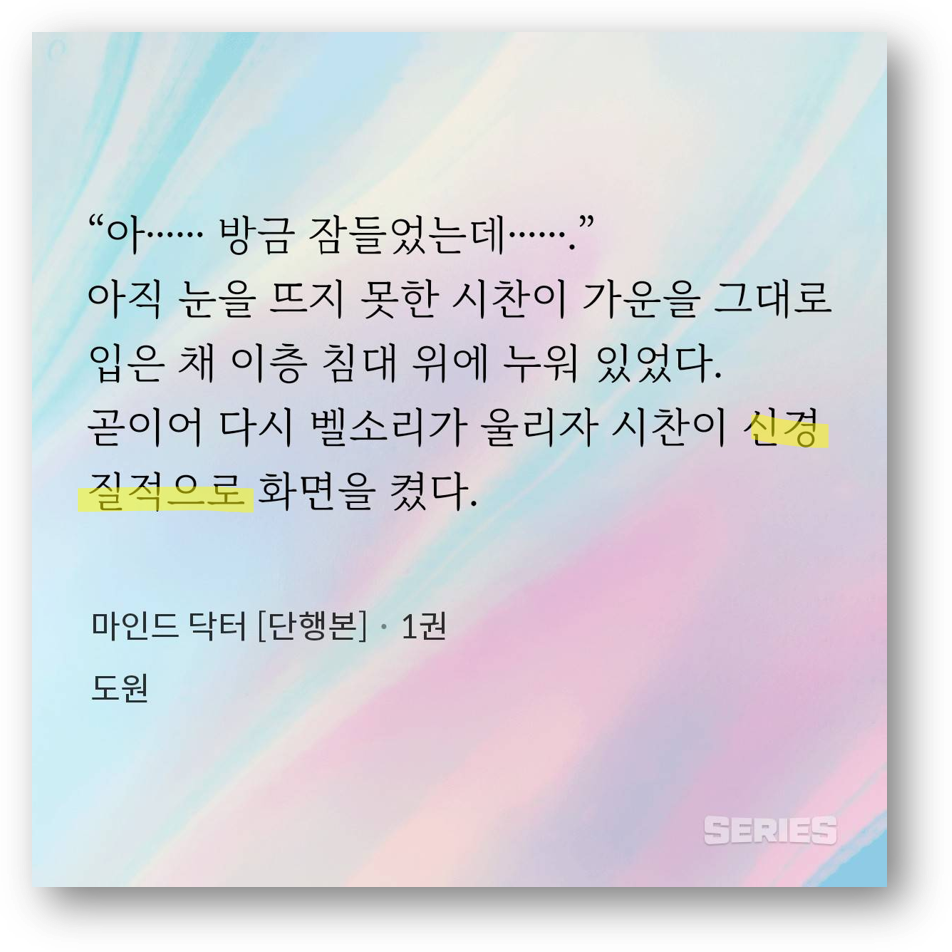
One of the first words used to describe Sichan is:
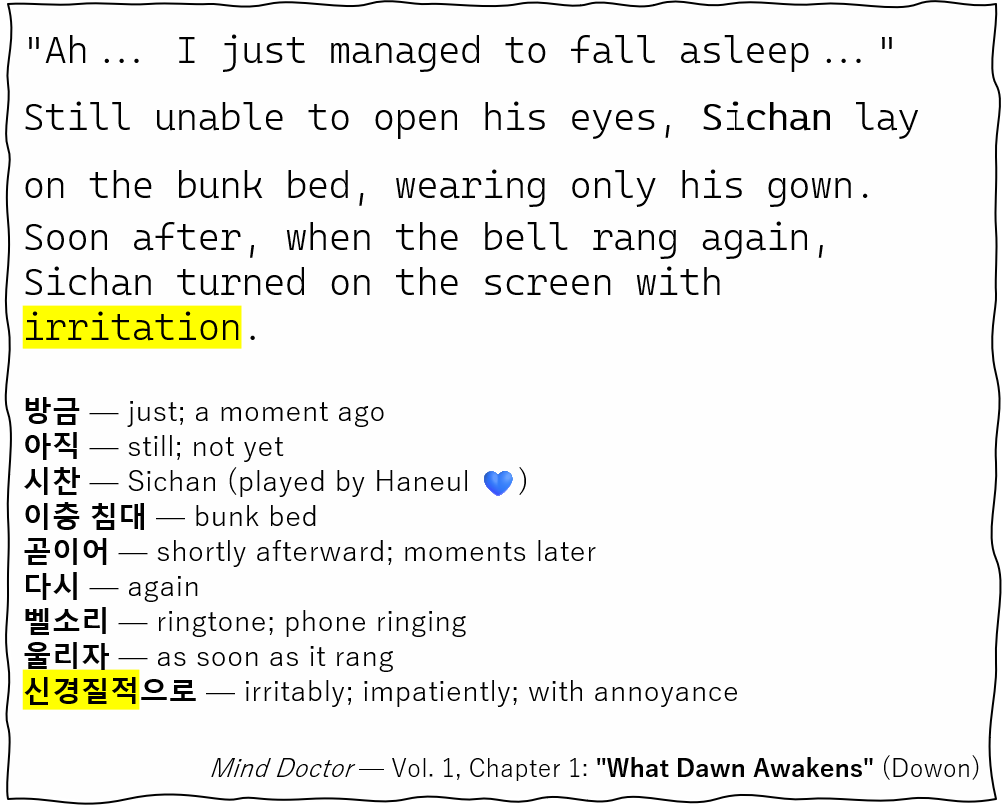
신경질적으로
“irritably,” “nervously,” or “in a highly strung manner.”
He has only just fallen asleep when the phone rings again.
Instead of calmly answering, he reacts 신경질적으로.
The word doesn’t simply mean “angry.” It suggests someone whose nerves are already worn thin. Every small interruption feels unbearable because the stress has been building for a long time.
From the very beginning, readers understand that this is a doctor living beyond his limits.
🔍 A Rookie Who Already Feels Burned Out
Another interesting expression is:
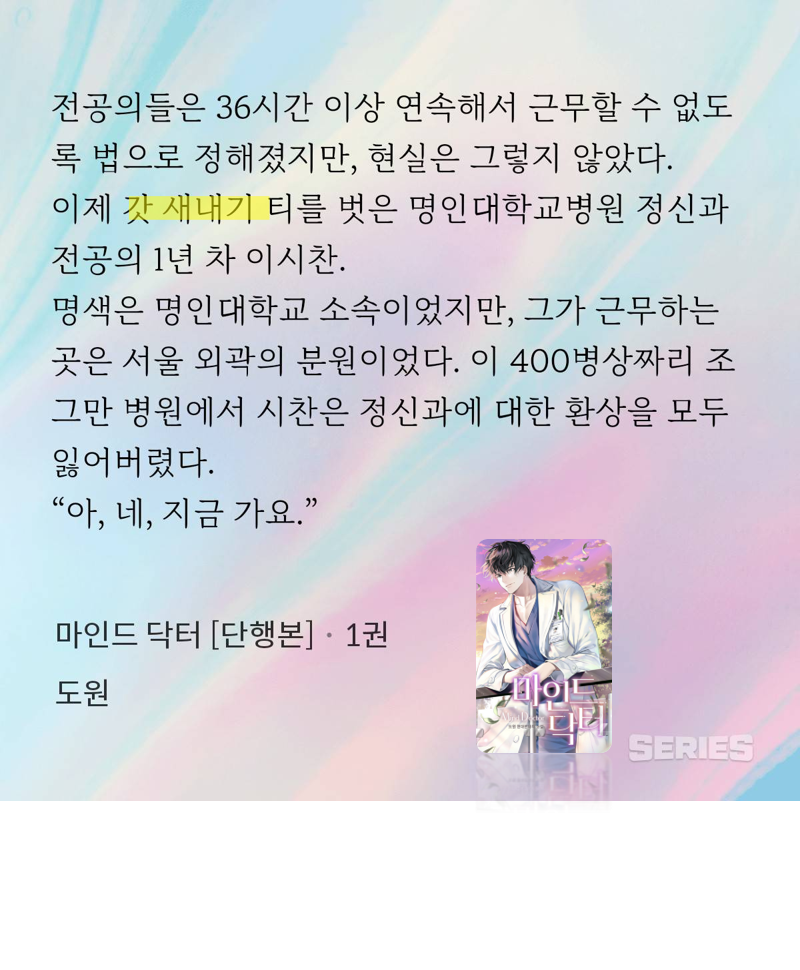
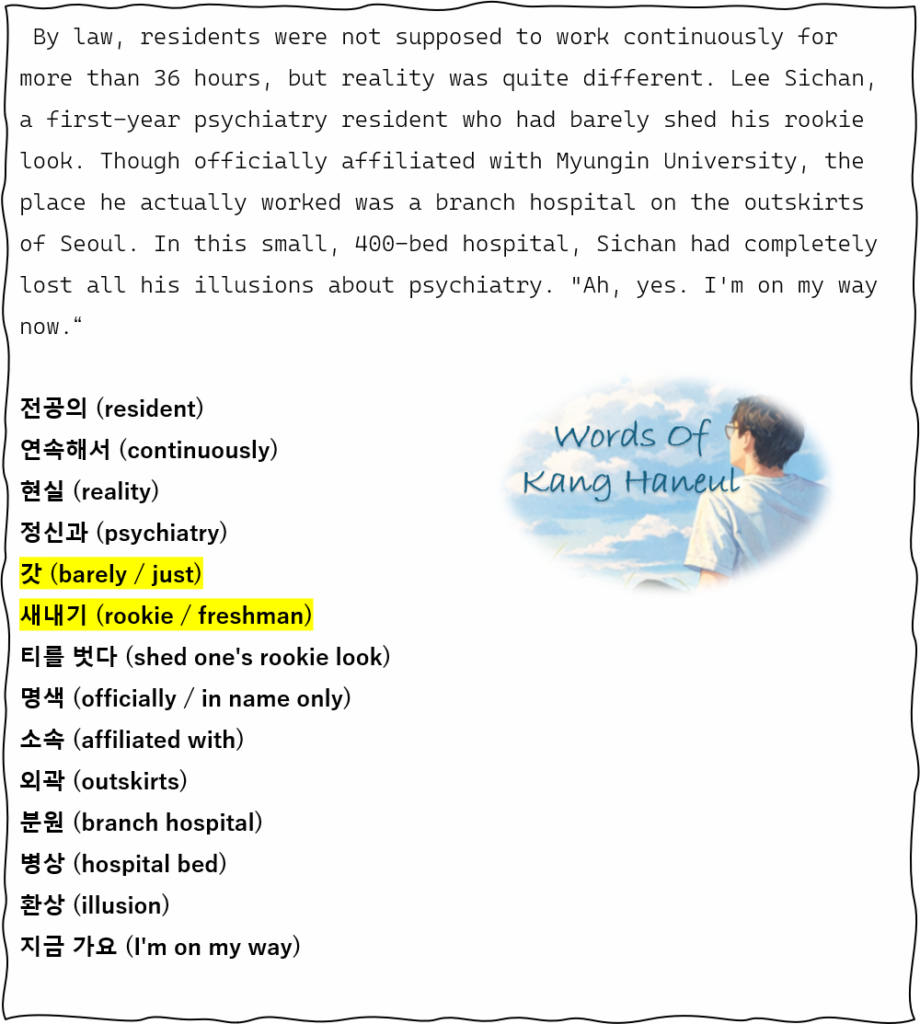
갓새내기
This consists of:
- 갓 – just, newly
- 새내기 – newcomer, freshman, rookie
Together, they mean “someone who has only recently become a rookie.”
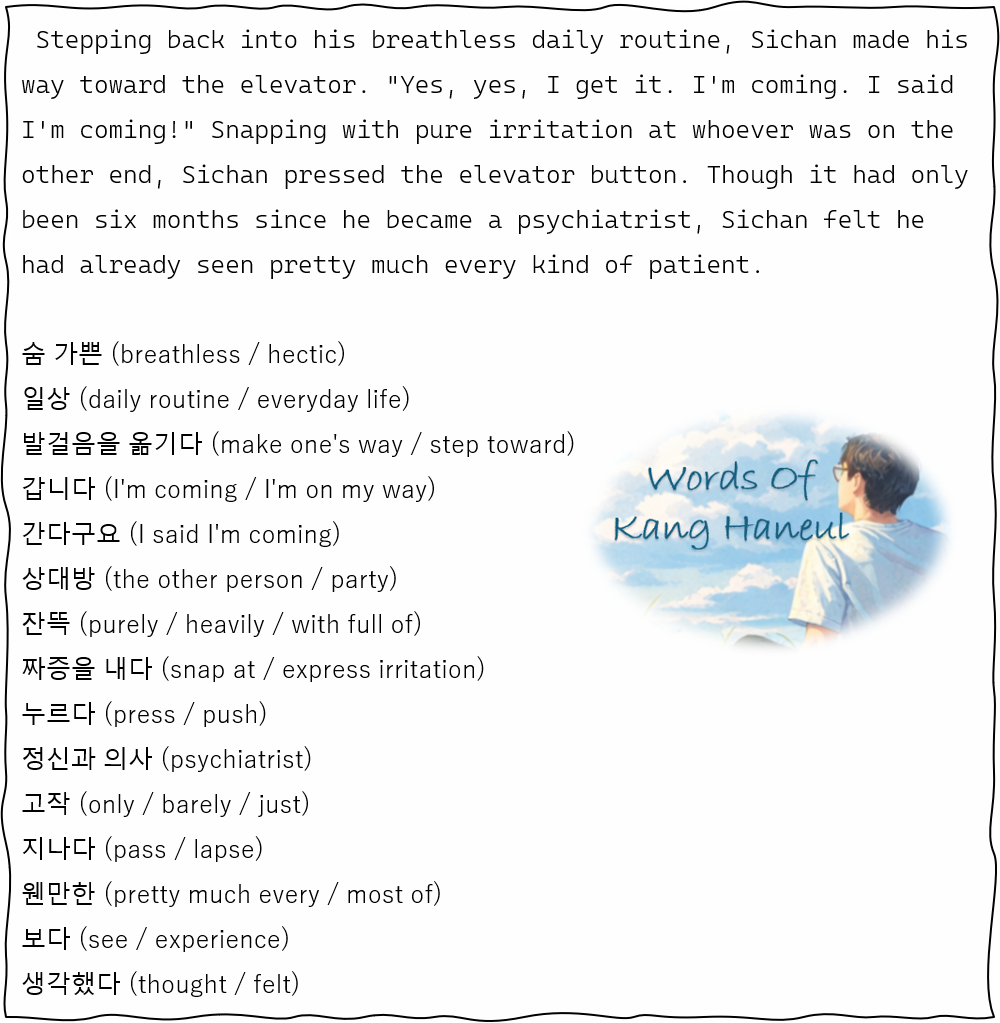
Ironically, although Sichan has only been a psychiatrist for six months, he already believes he has seen almost every kind of patient.
The novel deliberately contrasts his limited experience with his growing confidence.
💬 “Only Six Months”
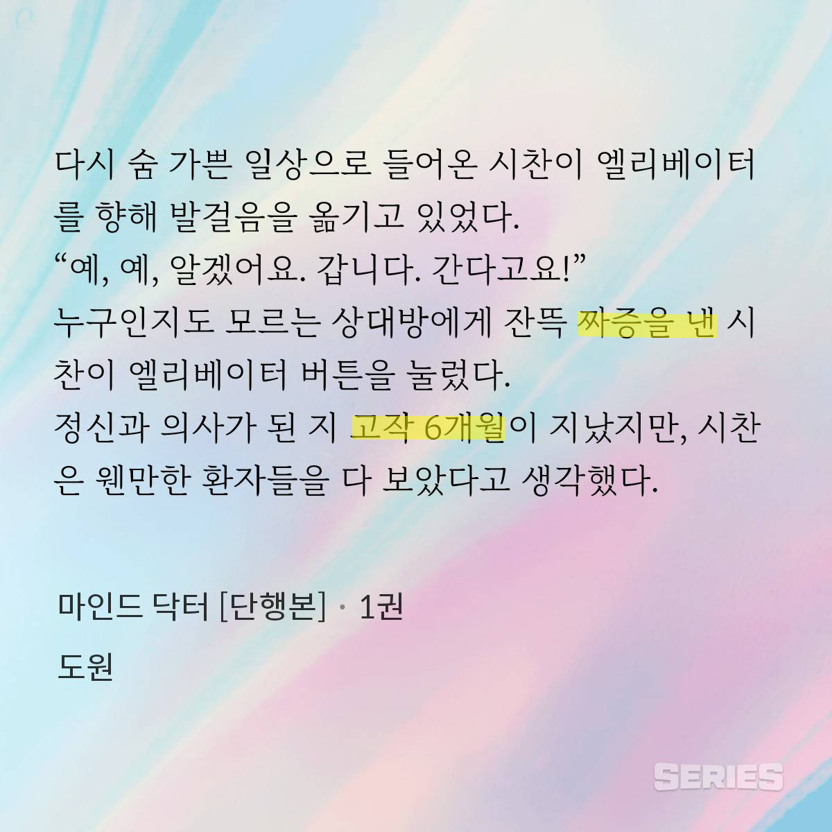
Sichan has been a psychiatrist for only six months.
The novel uses the word 고작, which means “only,” “merely,” or “no more than.” It emphasizes just how short a period six months really is.
Even so, Sichan already believes that he has seen just about every kind of patient.
On the phone, he snaps,
간다구요!
“I’m coming!” / “I said I’m coming!”
The ending -구요 adds emphasis, making it sound impatient and defensive.
The narration also uses the expression 짜증을 내다, meaning “to vent one’s irritation” or “to snap in frustration.”
He is young, confident, and quick-tempered. At this stage of the story, his frustration often shows before his professionalism does, revealing a doctor who is still learning not only medicine, but also how to manage himself under relentless pressure.
👍 자신만만 (Full of Confidence)
Sichan has a great deal of confidence in himself.
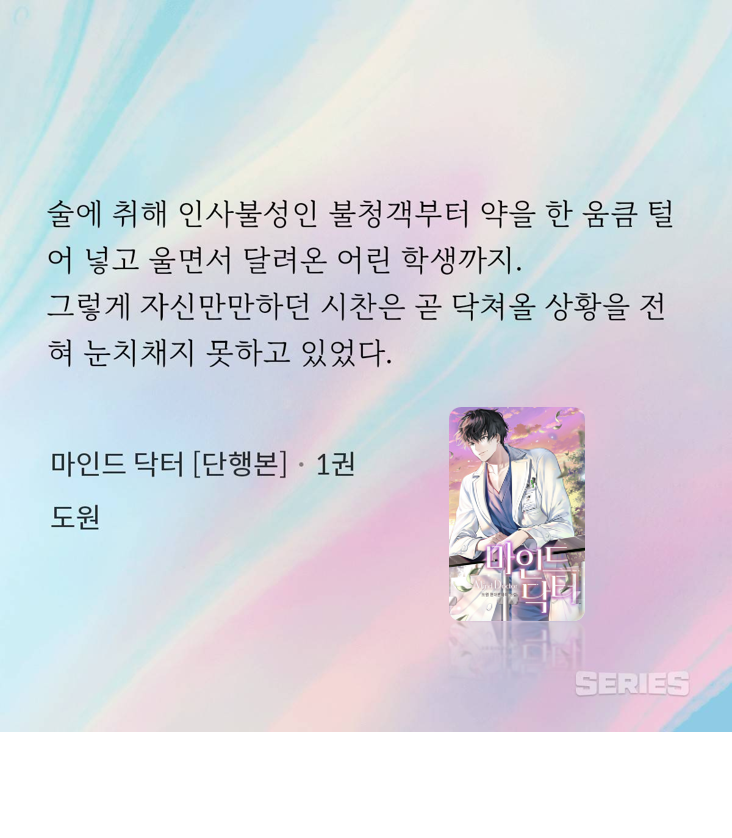
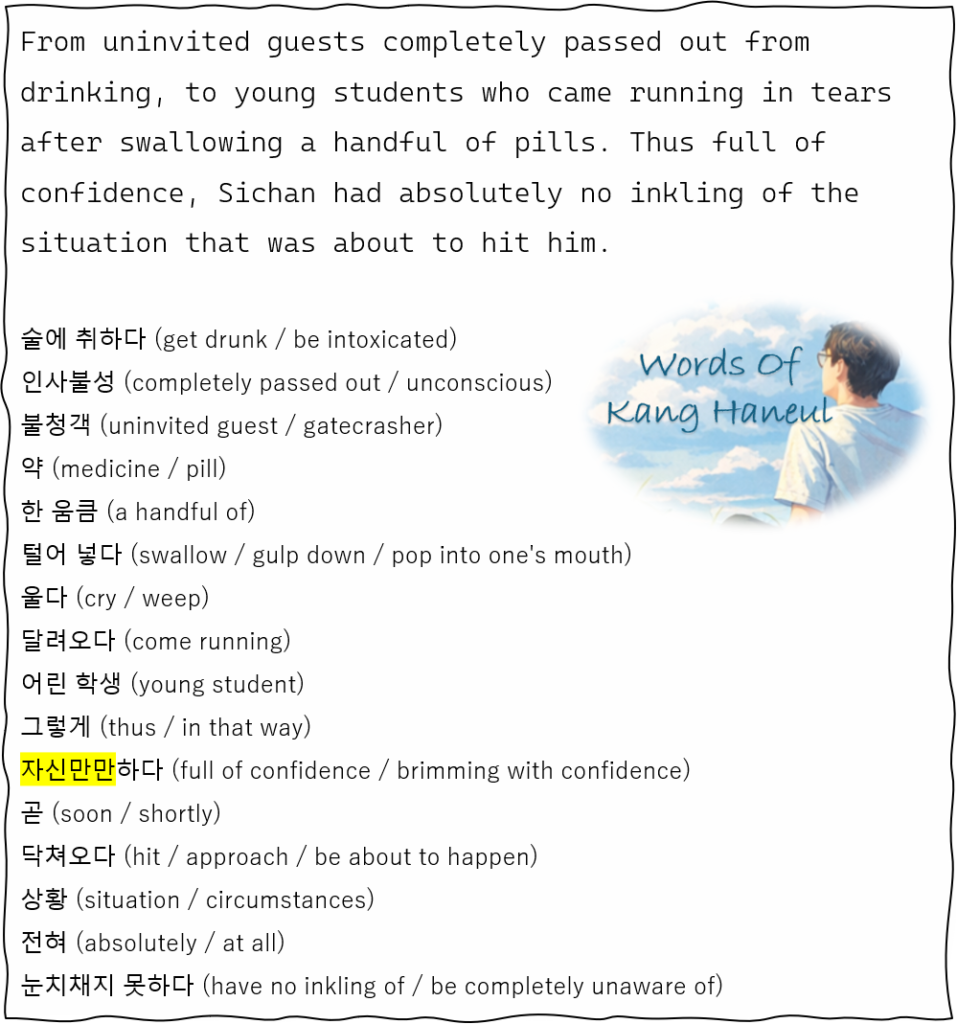
The novel describes him as 자신만만하다, meaning “to be full of confidence” or “completely self-assured.”
But immediately afterward, the narration introduces a contrasting expression:
눈치채지 못하고 있었다
“He had no idea.” / “He failed to realize.”
Despite his confidence, Sichan never sees what’s coming.
He doesn’t realize that a life-changing event is about to unfold.
This contrast between confidence and complete unawareness creates a powerful sense of dramatic irony. While Sichan believes he is prepared for anything, the reader already senses that everything is about to change.
From this moment on, the story begins to take a dramatic turn.
🎭 Strength as Self-Defense
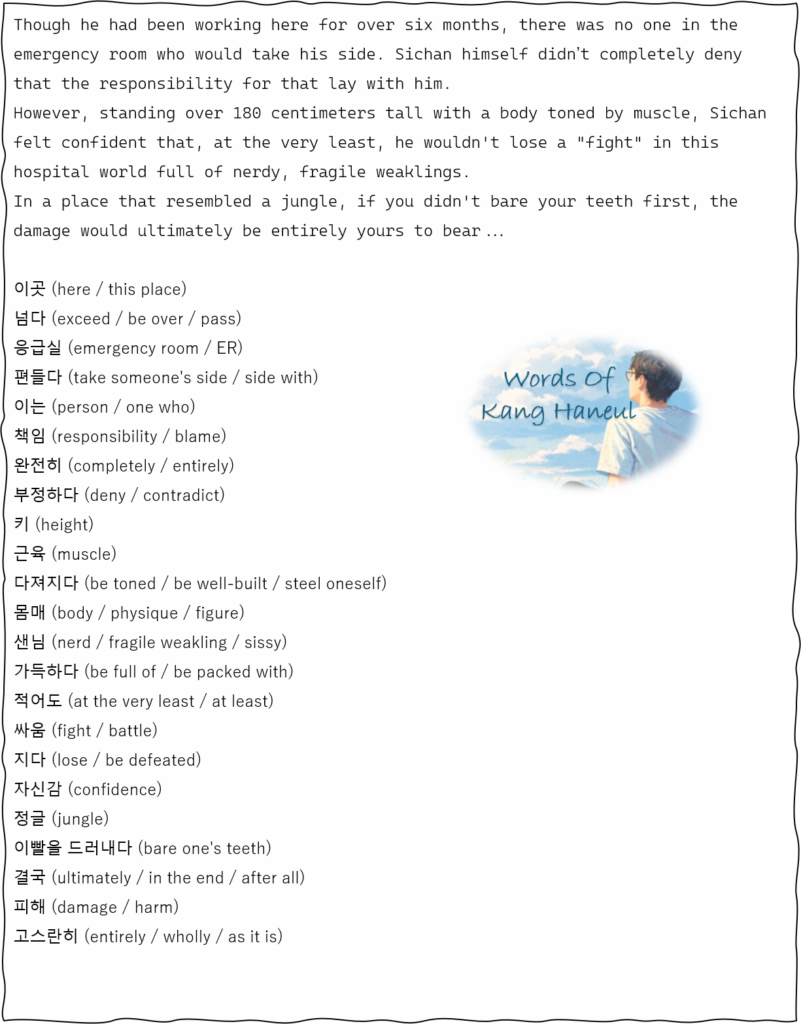
The novel also describes Sichan physically.
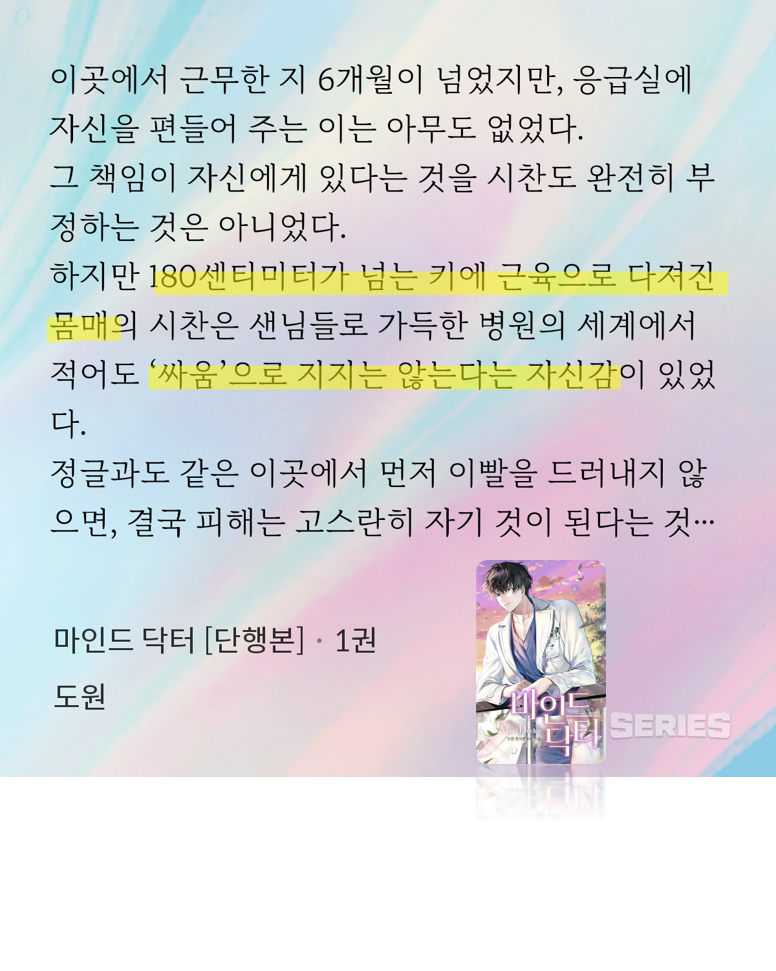
He is over 180 cm tall with a body built through training (omg!).
The Korean expression
근육으로 다져진 몸매
literally means
“a physique hardened by muscles.”
This isn’t simply character design.
Later, we learn how Sichan views the hospital itself.
To him, it is a jungle.
If you don’t show your fangs first, you’ll become the victim.
His aggressive attitude isn’t presented as cruelty—it is a survival strategy.
This tells us a great deal about his worldview before the story has even begun.
🌏 How Other People See Him
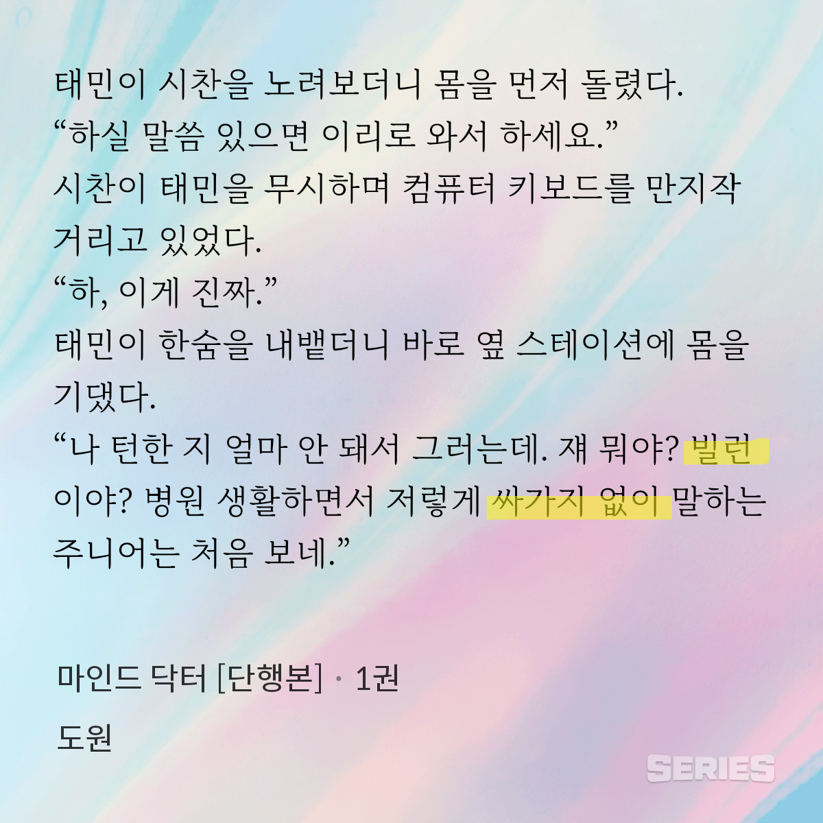
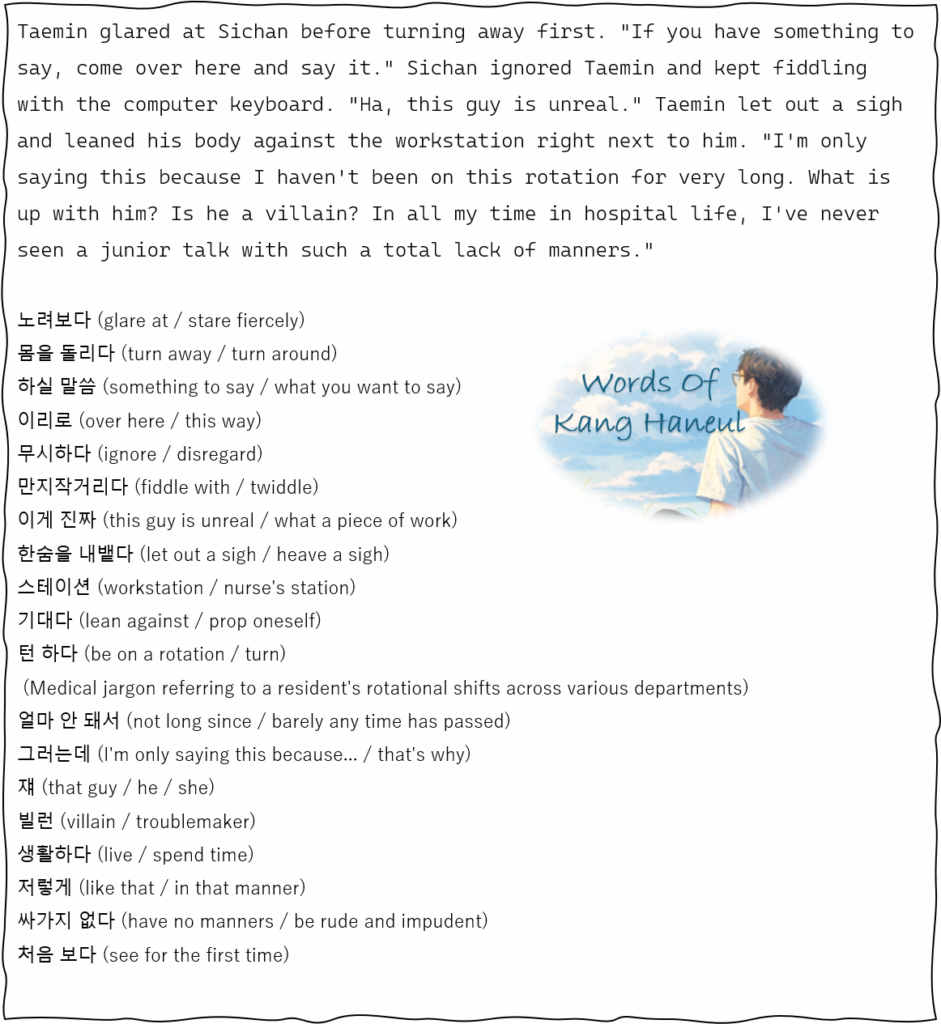
Not everyone likes Sichan.
One colleague (Taemin) even calls him a
빌런 (villain).
In modern Korean slang, 빌런 doesn’t necessarily mean an evil criminal.
Instead, it often describes someone who constantly causes trouble, behaves unpredictably, or makes life difficult for everyone around them.
Another expression appears:
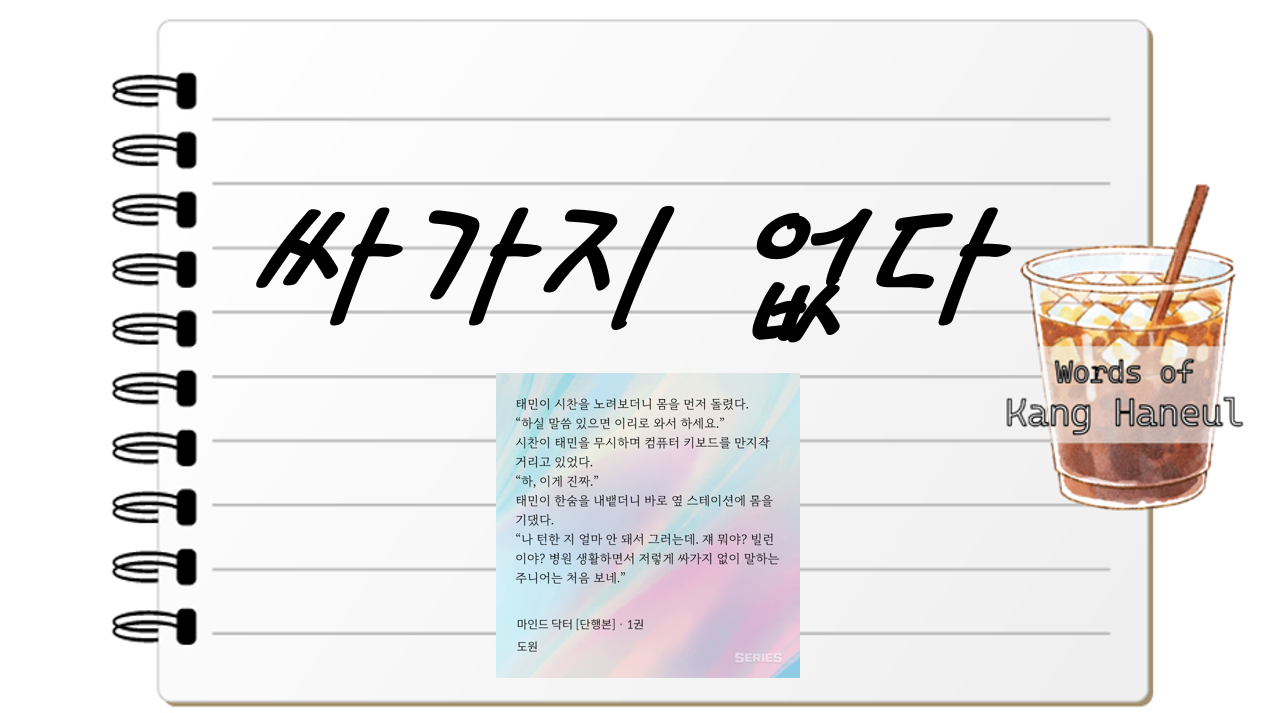
싸가지 없이
This is a strong slang expression meaning someone is rude, disrespectful, or has terrible manners.
From other characters’ perspectives, Sichan is simply an arrogant junior doctor.
But because readers have already seen his exhausting working conditions, they understand that there is much more beneath the surface.
🍊 Clementine’s Note
After reading only the first chapter, Lee Sichan doesn’t seem especially lovable🤣
He’s irritable.
He’s too proud.
He can even come across as rude.
Yet none of these traits feel one-dimensional.
The novel hints that they are defensive behaviors developed in an unforgiving environment and I think this complexity makes him fascinating.
Kang Haneul has portrayed many warm, gentle, and quietly resilient characters throughout his career.
If Mind Doctor follows the original novel closely, Lee Sichan may become one of his sharpest, roughest, and psychologically richest performances yet.
I can’t wait to see how Kang Haneul brings this complicated doctor to life.
There’s still some time to go before its March 2027 premiere💦
📚 Source
Original work: Mind Doctor (마인드 닥터)
Author: Dowon (도원)
Chapter: Volume 1, Chapter 1 – What Dawn Awakens
https://series.naver.com/novel/detail.series?productNo=10060714