
Level: Intermediate | TOPIK 3–4
Hello, I’m Clementine.
Today, I’d like to share a story behind that famous line by Kang Haneul that every fan knows.
Haneul is often asked to recreate the iconic line “Sahakrudung (사학루등)” from The Heirs in all sorts of places.
(For a detailed explanation of “사학루등,” see here ☟)
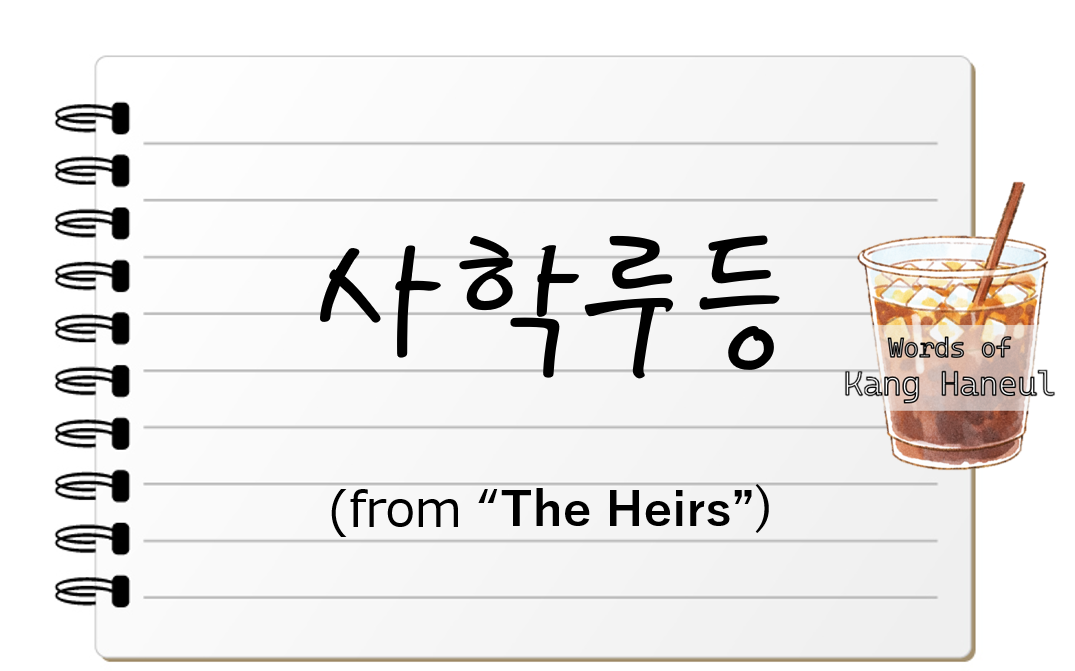
The legendary line from the drama The Heirs:
“The appearance of Lucifer at the school of Satans…”
(사탄들의 학교에 루시퍼의 등장이라…)
This line has followed him for years, and he keeps getting teased about it.
And this time, he performed it in a rather unexpected place.
Collaboration with the legendary gaming YouTuber Daedoseogwan (대도서관).
Hardcore fans probably already know this, but Haneul is actually a serious gamer.
He has openly said that he’s a huge fan of Daedoseogwan, one of Korea’s most famous gaming YouTubers, and that he even watches his streams regularly.
The full video is about 30 minutes long, and throughout the entire conversation you can see Haneul being visibly excited to talk with a gamer he admires so much. 💓
Officially, he appeared on Daedoseogwan’s channel to promote the movie Streaming, but the conversation ends up being almost entirely about games, with only a brief moment touching on movies or acting.
(Like 90% gaming talk, 10% acting and movies. 😆)
Today we’ll focus on this rare acting discussion.
Daedoseogwan first tries performing the famous line “사학루등,” after which Haneul critiques his acting and then demonstrates how it should really be done.
Let’s take a closer look.
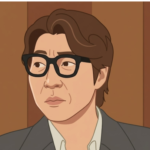
제가 지금 한번 해보겠습니다
Let me try it once.

아 예예예예
Ah, yes, yes, yes.
진지하게 합니다 진짜
I’ll do it seriously. For real.
사탄들의 학교에 루시퍼의 등장이라…
재밌어지겠는데
“Lucifer appearing at the school of Satans…
This is going to get interesting.”
ㅋㅋㅋㅋㅋㅋㅋㅋㅋㅋ
smirking
그니까 그것은 이제 쯔꾸르 게임 중에
No, I mean—it’s like those RPG Maker games, you know?
밑에 대사에 그게 뜬 거예요
The line just shows up in the dialogue box at the bottom,
그게 뜬 거를 더빙하는 정도…
하하하하하아하하하하핳하하하하하핳!!!!
and you’re basically just dubbing whatever appears there.
That’s about the level of it.Hahahahahaha!
연기가 안되는군요…
So my acting’s not great, huh.
아니아니아니아니
No, no, no, no.
장난입니다 장난입니다
I’m kidding, I’m kidding.
근데 이게 원래
But originally,
대사 자체가 되게 문어체잖아요
the line itself is written in a very literary style, right?
구어체가 아니라
Not in a conversational style.
네 말하는 투가 아니잖아요
Right, it’s not how people normally talk.
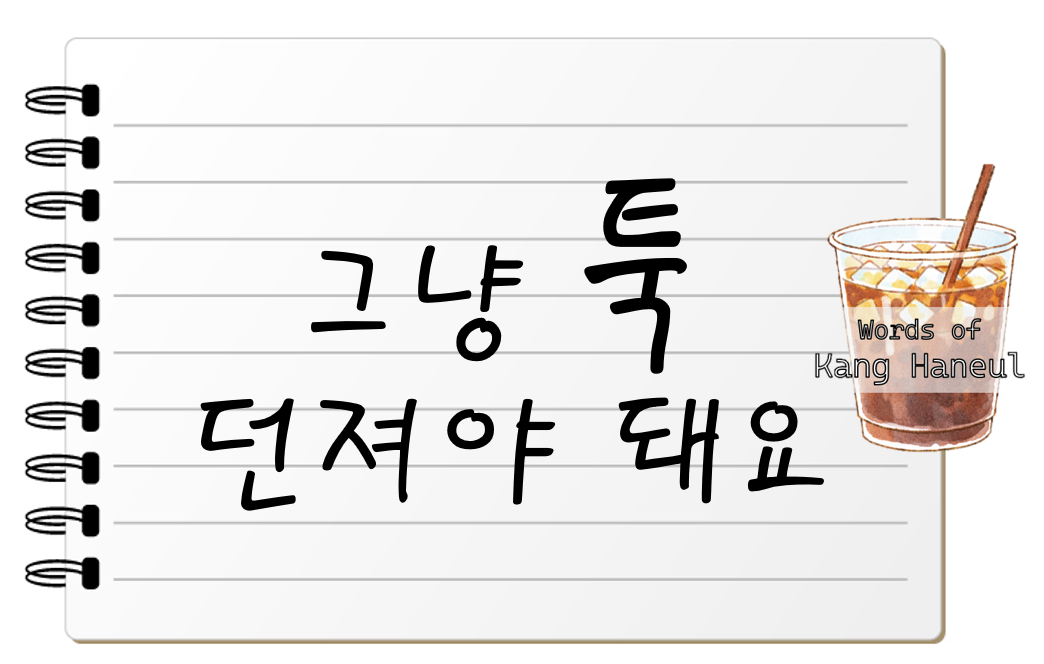
그거는 더 툭툭 해야 돼요 더 툭툭하게
You have to deliver it more bluntly.More casually.
더 툭툭하게 던져야 되는
More like you’re just tossing it out.
더 더 그냥 의미 부여를 하면 안 돼
You shouldn’t try to give it too much meaning.
더 의미 부여를 하지 않고 그냥 툭 말하듯이.
Just say it lightly, without adding weight to it.
제가 해보겠습니다
Let me try.
사탄들의 학교에 루시퍼의 등장이라…
재밌어지겠네…
와하하 다르네!!!
Wow, that’s different!
그냥 그냥 그냥 아무런 그냥
You just… just… without really adding anything—
아 나 나 나 바보 약간 이렇게 해서
Ah, like, I—I—I… kind of like a fool, like this.
그냥 툭 던져야 되는
You just toss it out like that.
진짜 명심할게요
I’ll definitely remember that.
아닙니다 아닙니다
No, no, not at all.
Haneul’s Acting Masterclass: Key Words That Explain His Acting Technique
| Korean (pronunciation | English | How it’s used here |
|---|---|---|
| 진지하게 (jinjihage) | seriously | Said when he declares, “I’ll do it seriously,” showing determination before acting. |
| 그니까 (=그러니까) (geunikka) | so / I mean | Used to start an explanation: “So, it’s from an RPG Maker game…” |
| 이제 (ije) | now / well | A filler that softens the start of an explanation, similar to “well,” “you know,” or “so.” |
| 쯔꾸르 게임 (jjeukkureu geim) | RPG Maker game | Refers to the type of game where dialogue appears in a text box on screen. |
| 대사 (daesa) | line / dialogue | Refers to the dialogue line that appears at the bottom of the screen. |
| 뜬 (tteun) | appeared / popped up | Describes how the line appeared on the screen. |
| 더빙 (deobing) | dubbing | Means voicing or dubbing the line that appears on screen. |
| 정도 (jeongdo) | about / roughly / level | Indicates that it was only “about that level,” not a serious acting performance. |
| 는군요 (neungunyo) | I see / so… | A reaction meaning “I see,” here implying “So the acting didn’t work…” |
| 근데 (=그런데) (geunde) | but / though | Used to shift the topic: “But originally…” |
| 원래 (wonrae) | originally / by nature | Explains that the line was originally written in a certain way. |
| 자체 (jache) | itself | Emphasizes that the line itself is written in a literary style. |
| 되게 (doege) | very / really | Intensifies the statement: “It’s really written in a literary style.” |
| 문어체 (muneoche) | literary style | Refers to written, formal language rather than spoken language. |
| 구어체 (gu-eoche) | spoken style | Contrasted with literary style; everyday conversational language. |
| 투 (tu) | tone / manner of speaking | Refers to the speaking style or delivery of the line. |
| 툭툭 (tuk-tuk) | bluntly / casually | Describes delivering the line lightly and casually, without overacting. |
| 던져야 되는 (deonjyeoya doeneun) | should throw out | Means the line should be “thrown out” casually, not acted too heavily. |
| 의미 부여 (uimi buyeo) | giving meaning / overinterpreting | Advice not to add too much meaning or weight to the line. |
| ~듯이 (~deusi) | like / as if | Used to describe the manner: “say it as if you’re just tossing it out.” |
| 다르네 (dareune) | that’s different | Reaction after hearing the improved version of the line. |
| 아무런 (amureon) | any / whatsoever | Suggests saying it without any particular intention or emphasis. |
| 명심 (myeongsim) | keep in mind / remember | Said jokingly as “I’ll remember that,” after receiving acting advice. |
💡 Key Expressions That Reveal Haneul’s Acting Philosophy
Haneul spent about 90% of the conversation excitedly talking about games. But the moment he switched into acting-coach mode, the words he chose were completely different. In those brief comments, you can see the subtle sensibility of a truly skilled actor.
Here are some expressions that blog readers should definitely know—phrases that reveal both a natural, polished Korean speaking style and Haneul’s own approach to acting.
1. “Connector Words” That Control the Tone of Conversation
These are words Haneul used almost instinctively while explaining things—almost as naturally as breathing.
이제 (ije)
Originally meaning “now” or “already,” but Haneul often uses it with the nuance of “well,” “so,” or “you know.”
It’s one of those subtle filler expressions he uses as he pauses to choose his words and explain things clearly.
근데 (geunde) / 그니까 (geunika)
These mean “but” and “so,” and are essential for moving a conversation forward. Their formal forms are 그런데 and 그러니까, but in everyday speech they are shortened.
When someone passionately explains their own opinion—like Haneul does—using these connectors instantly gives the conversation a more natural, native rhythm.
되게 (doege)
A casual word used to emphasize something, meaning “very” or “really.”
It frequently appears in everyday Korean conversation.
2. The Essence of Actor Kang Haneul: Key Words About Acting
This is the most important part of the conversation. These expressions reveal how Haneul thinks about delivering the famous line “사학루등 (Sahak-rudeng).”
의미 부여 (uimi buyeo) = “giving meaning”
- 의미 (uimi): meaning
- 부여 (buyeo): to assign / to give
Together, 의미 부여 literally means “assigning meaning.”
In acting terms, however, it often refers to over-interpreting a line or adding too much emotional weight to it.
Haneul’s advice here was essentially:
“Don’t overdo the meaning—just say it more casually.”
That perspective—knowing when not to add emotional weight—is very much a professional actor’s mindset.
툭툭 던지듯이 (tuk-tuk deonjideusi) = “as if tossing it out casually”
- 툭툭 (tuk-tuk): casually, lightly, offhandedly
- 듯이 (deusi): “as if” / “like”
Verb stem + 듯이
You simply attach 듯이 to the verb stem (the form without 다).
Whether the stem ends with a final consonant does not matter.
Example:
던지다 (to throw) → 던지듯이 (as if throwing)
Haneul’s philosophy is clear:
Even a dramatic or pretentious line can work better when it’s delivered without too much emotion—almost as if you’re just tossing it out.
Once you learn ~듯이, it becomes much easier to form comparisons like “as if…” or “like…” in Korean.
아무런 (amureon) = any / whatsoever
When followed by a negative expression, it means “without any…”
When Haneul said
“아무런… 그냥 툭” (“without any… just toss it out”),
he was probably thinking of the fuller phrase:
아무런 생각 없이 — “without any thoughts.”
In other words, he was emphasizing the importance of clearing your mind and delivering the line naturally, without overthinking it.
Clementine’s Note 🍊
Even though about 90% of the conversation was just excitedly talking about games, the moment it turned to acting, Haneul suddenly switched into “professional mode.” It was honestly so cool to see.
The line “사학루등” clearly still embarrasses him, but when it came to giving acting advice, he immediately broke it down in a very logical way—explaining things like “Don’t give it too much meaning” and “When the line is written in a literary style, you should just toss it out casually.” That kind of thoughtful analysis really shows why he’s considered such a skilled actor.
Personally, my favorite moment is when he goes “Ahahahahahaha 💓💓💓” and grabs Daedoseogwan’s hand, rubbing his cheek against it.
Right here ↓ 💗
This interview took place around March 2025.
Haneul, who was a big fan of Daedoseogwan(대도서관), even promised during the conversation that he would visit his home someday.
However, about six months later, on September 6, Daedoseogwan sadly passed away, and the visit never came to be.
May he rest in peace.
Seeing how excited and happy Haneul was during the interview makes the situation even more heartbreaking. 😢