
Level: Pre-Intermediate | TOPIK 2–3
【TOPIK Level 2–3】
A Trailer for The First Ride
The First Ride is getting fresh attention again ahead of its Japanese release on September 25, 2026, with several new subtitled trailers and clips now circulating online.
Today, we’re looking at one of those scenes.
At a family dinner with his three best friends, model student Tae-jung (played by Kang Haneul) tries to persuade his parents to let him go on a trip.
His argument centers on a very familiar Korean expression: 다음에.
It can simply mean “next time,” but in some situations, it can also work as a polite, noncommittal social nicety — something close to “sometime” or “maybe next time.”
Korean has a word for this kind of social nicety, 인사치레, although Haneul uses a different expression in the scene.
Let’s quickly look at four useful expressions from Tae-jung’s opening line.
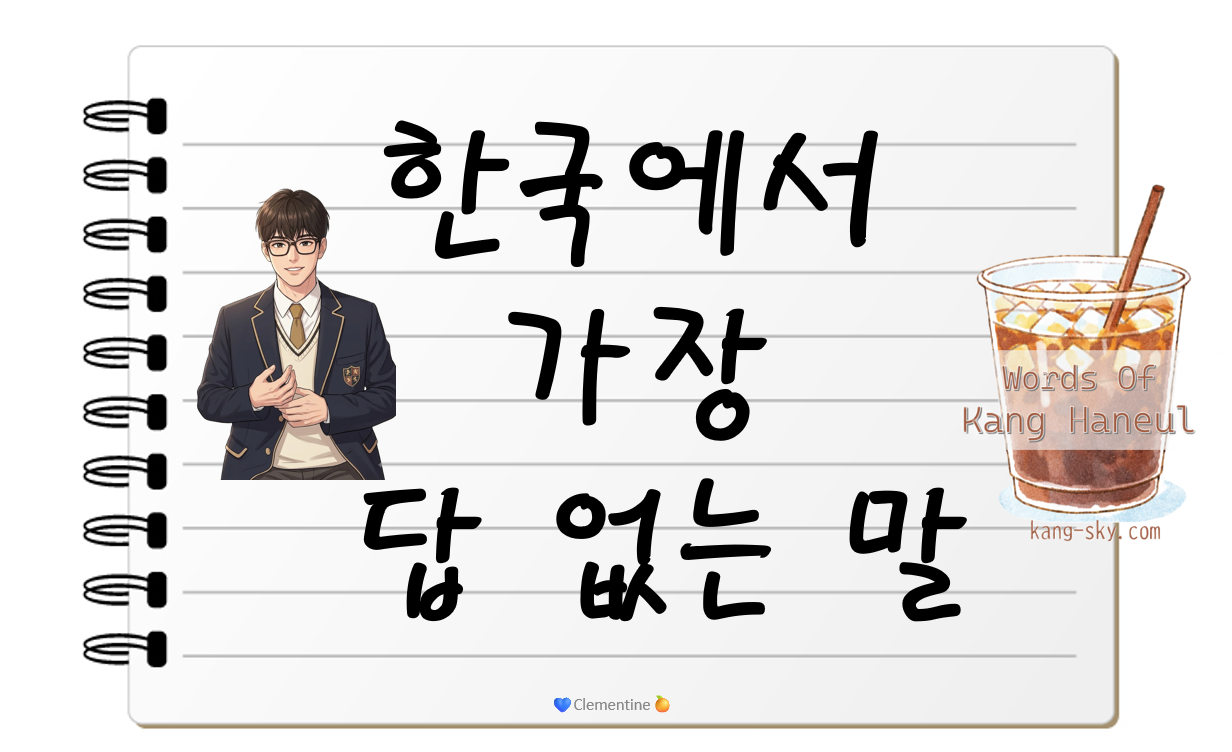
한국 사람들이 자주 하는 말 중에 가장 답 없는 말이 뭔지 아세요?
“다음에”예요.
Do you know the most hopeless thing Koreans often say?
“Next time.”
Four Useful Everyday Expressions
| Expression | Meaning | Quick Note |
|---|---|---|
| 중에 가장 | the most / the best among | 중에 = among, 가장 = most |
| 답 없는 말 | a hopeless / unreliable thing to say | 답이 없다 can mean “there’s no answer,” but also “hopeless” |
| 뭔지 아세요? | Do you know what it is? | 뭐인지 → 뭔지 |
| 다음에 | next time / some other time | If no specific date is set, it can sound like a polite brush-off |
-중에 가장
This means “the most … among …”
중에 means “among,” and 가장 means “the most.”
- 친구들 중에 가장 키가 커요.
He’s the tallest among his friends. - 이 영화가 본 것 중에 가장 재미있었어요.
This was the most interesting movie I’ve seen.
답 없는 말
Literally, this means “a phrase with no answer,” but here it has the nuance of:
“a hopeless thing to say” or “something you can’t really rely on.”
- 정말 답 없는 상황이네요.
This is really a hopeless situation. - 그 사람은 진짜 답이 없어요.
That person is really hopeless.
뭔지 아세요?
This means:
“Do you know what it is?”
뭔지 is the contracted form of 뭐인지.
- 이게 뭔지 아세요?
Do you know what this is? - 제가 왜 화났는지 아세요?
Do you know why I’m upset?
다음에
This means:
“next time,” “some other time,” or “later.”
When no specific date is mentioned, it can sometimes sound like a social nicety rather than an actual plan.
The Japanese subtitles translate it as “a social nicety,” which is such a smart choice 💙
- 다음에 밥 한번 먹어요.
Let’s grab a meal sometime. - 다음에 또 만나요.
Let’s meet again sometime.
A Little Practice 🎤
Choose the expression that best fits each blank.
중에 가장 / 답 없는 말 / 뭔지 아세요? / 다음에
- 이 검은 거 ________?
Do you know what this black thing is? - 우리 ________ 같이 밥 먹어요.
Let’s eat together sometime. - 제가 본 영화 ________ 재미있었어요.
It was the most interesting movie I’ve seen. - “언제 한번 보자”는 정말 ________ 같아요.
“Let’s meet sometime” really feels like something you can’t rely on. - 이 사람들 ________ 누가 제일 웃겨요?
Who is the funniest among these people? - ________ 여행 가면 어디 가고 싶어요?
If you go on a trip next time, where would you like to go?
Answers:
- 뭔지 아세요?
- 다음에
- 중에 가장
- 답 없는 말
- 중에 가장
- 다음에
Clementine’s Note 🍊
Back when my Korean was much worse than it is now, I once went to a bank in Korea without all the documents I needed.
I said:
다음에 가져올게요.
meaning something like, “I’ll bring them next time.”
The staff member gave me a really scary look and said 안 돼요 😱ㅋㅋ
At the time, I meant:
“I’ll bring them when I come back.”
But looking back, maybe it sounded more like:
“I have no idea when I’m bringing them.”
Almost like, “I probably won’t bring them at all.” 😂
A clearer way to say what I actually meant would have been:
다시 올게요.
“I’ll come back.”
To me as a Japanese speaker, Korean social niceties like 인사치레 often feel quite familiar.
But precisely because they seem so similar, small cultural differences can sometimes lead to misunderstandings.
Those subtle differences between Korean and Japanese are fascinating too, but I’ll save that story for…
next time. ✋